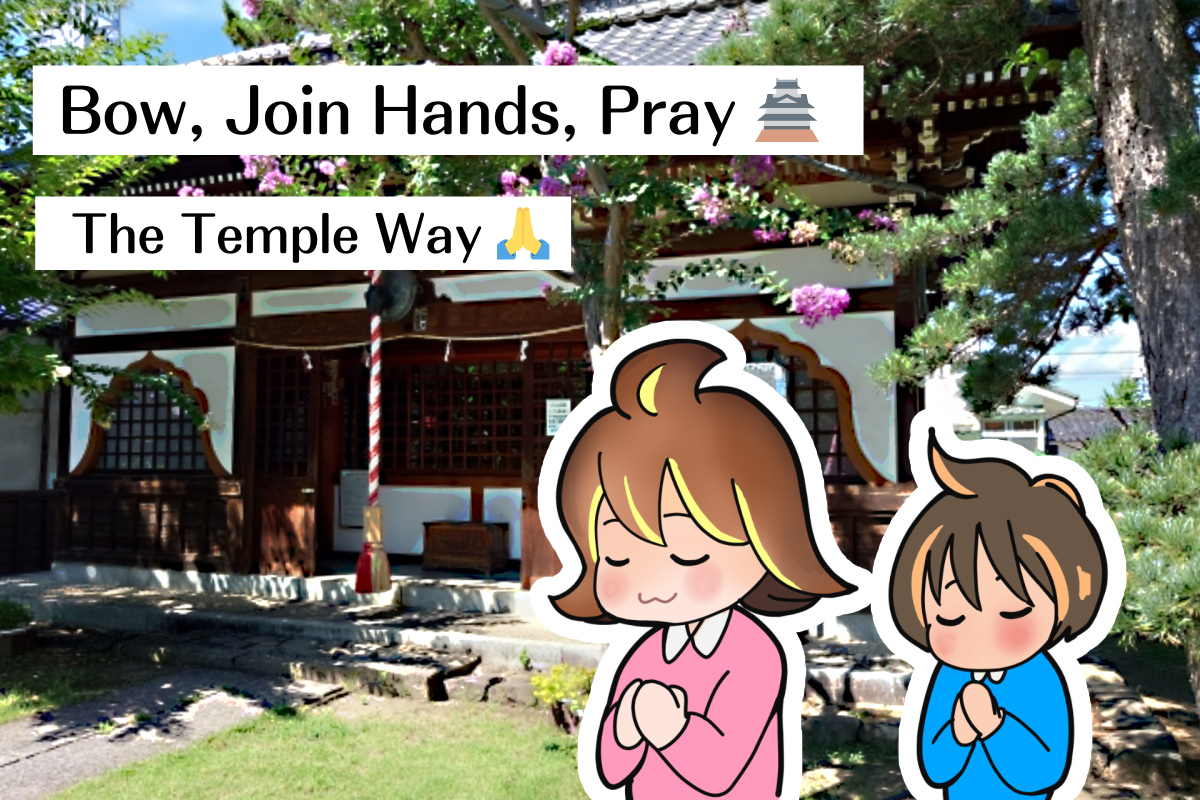

Hi, I’m Puchiko!🙏✨
Japan has just as many beautiful Buddhist temples as it does Shinto shrines.
But many travelers wonder: “How is a temple different from a shrine?” and “What should I do when visiting a temple?”
Don’t worry—temple etiquette is simple once you know the basics.
In this guide, I’ll walk you through both the traditional customs and the modern, relaxed approach, so you can enjoy Japan’s Buddhist culture without stress. 🌸
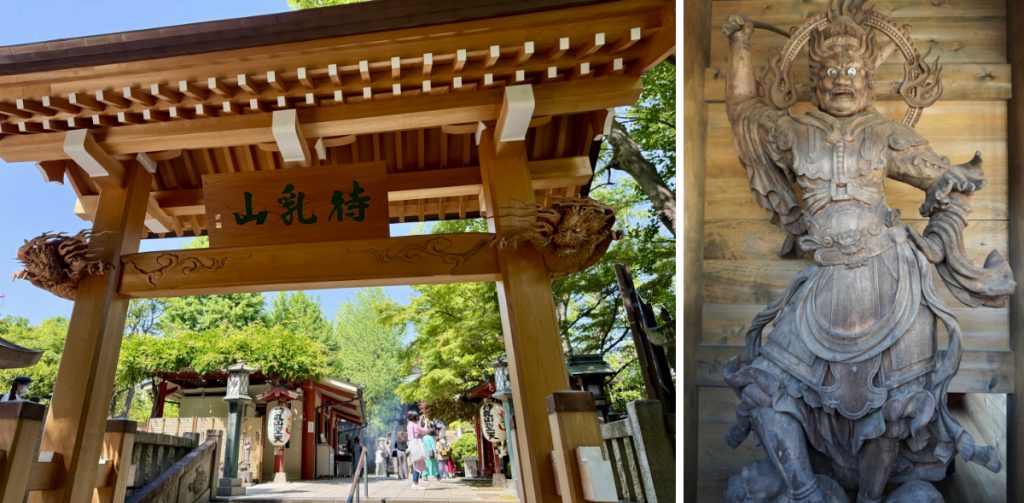
1. Temple Entrance: Sanmon Gate and Nio Guardians
Sanmon Gate
- Traditional way: Bow lightly before passing through. It marks the sacred boundary of the Buddha’s world.
- Modern approach: If it’s crowded, simply walk through while keeping a respectful attitude.
Nio Guardians
- Traditional way: The fierce statues (Agyo with open mouth, Ungyo with closed mouth) protect the temple from evil.
- Modern approach: See them as friendly protectors, and admire their powerful presence.
2. Purification: Temizuya and Incense Burner
Temizuya (Water Basin)
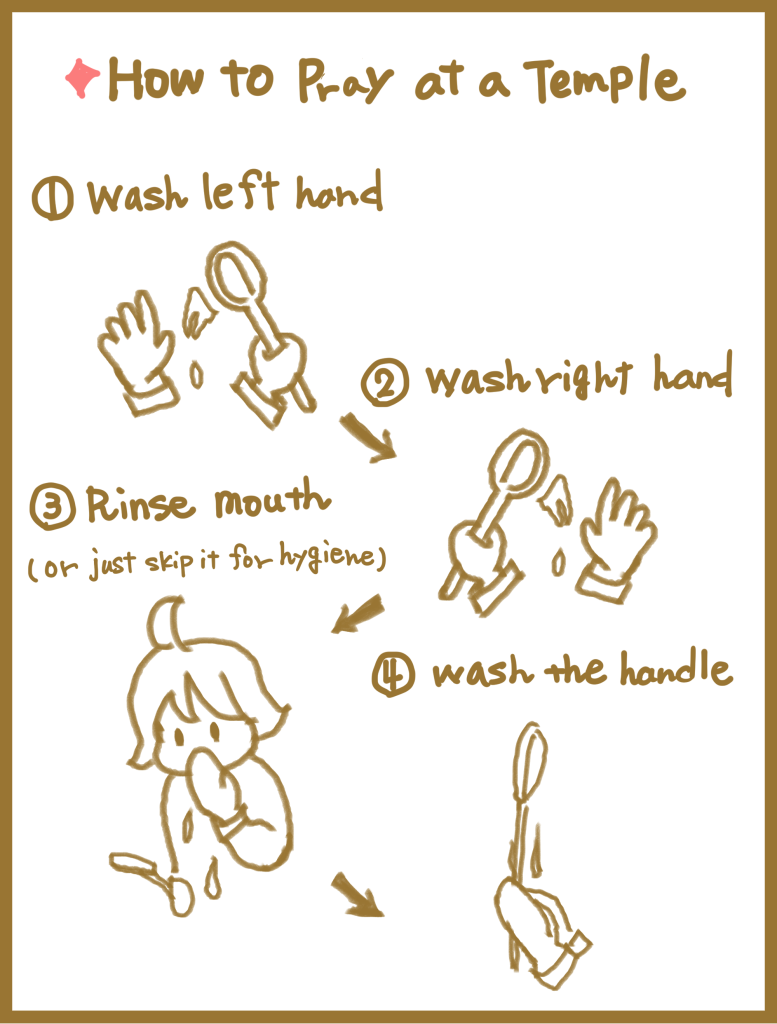
- Traditional way: Rinse right hand → left hand → mouth → rinse the ladle handle.
- Modern approach: Many visitors skip rinsing the mouth for hygiene reasons. Washing hands is enough.
Jokoro (Incense Burner)
- Traditional way: Purchase incense (usually around 100 yen), light it, place it in the burner, and bathe yourself in the smoke. The smoke is believed to cleanse body and spirit.
- Modern approach: Buying incense is optional. Simply waft a little smoke over your hands or head—it’s symbolic and calming.
3. Main Hall: Offering and Gassho (Prayer)
Offering (Saisen)
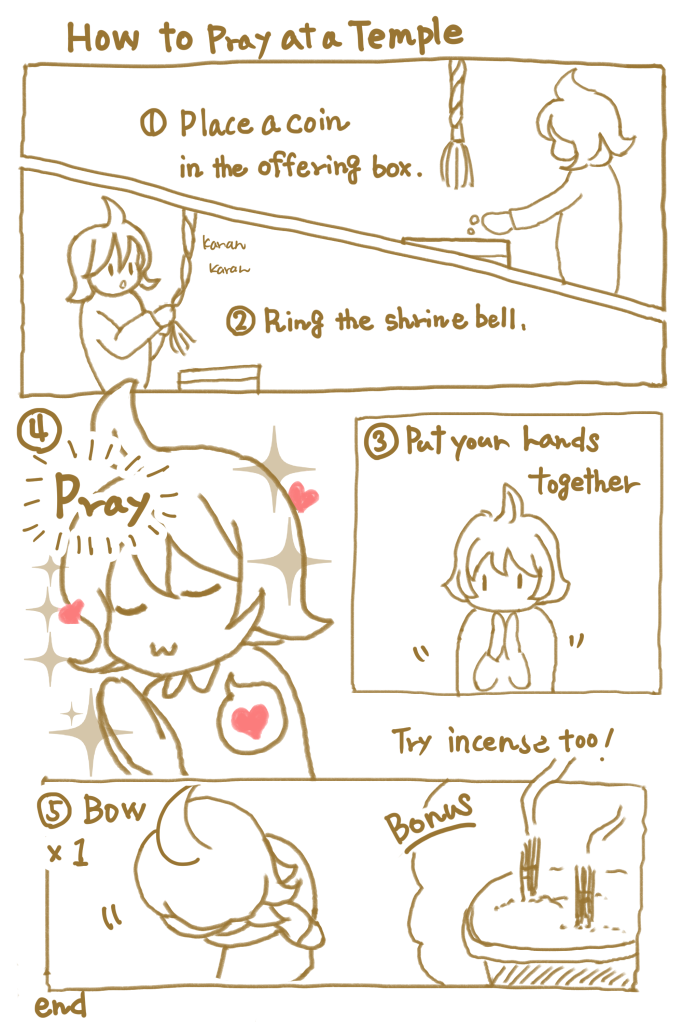
- Traditional way: Quietly place a coin into the box before praying.
- Modern approach: The amount doesn’t matter—1 yen is fine. What counts is your gratitude.
How to Pray
- At shrines, the etiquette is two bows, two claps, one bow.
- At temples, do not clap. Instead, put your hands together in gassho (palms pressed, fingers up) and close your eyes for a moment.
This gesture shows respect for the Buddha while helping you center your mind.
4. What Should You Pray For?
- Traditional: Prayers for ancestors, gratitude to the Buddha.
- Modern:
- Peace of mind for yourself and family
- Strength to overcome difficulties
- Health and safety
- Everyday gratitude
👉 Unlike shrines where people often make wishes, temples are more about seeking wisdom and inner peace from the Buddha.
5. Conclusion: Quiet Dialogue with the Buddha
Visiting a temple is not just sightseeing—it’s a moment of quiet dialogue with the Buddha.
Knowing the customs will help you feel more connected, but don’t worry about being perfect. A respectful attitude is enough.
Temples emphasize silence, reflection, and peace of mind, different from the celebratory atmosphere of shrines.
👉 Related guides:
💡 Puchiko’s tip:
“In Japan, funerals and graveyards are usually managed by temples. Every August during Obon, people believe the spirits of ancestors return home, and families visit graves to honor them. It’s another way temples are deeply connected to Japanese daily life.”
Let’s enjoy more of Japan’s mysteries! 🇯🇵✨