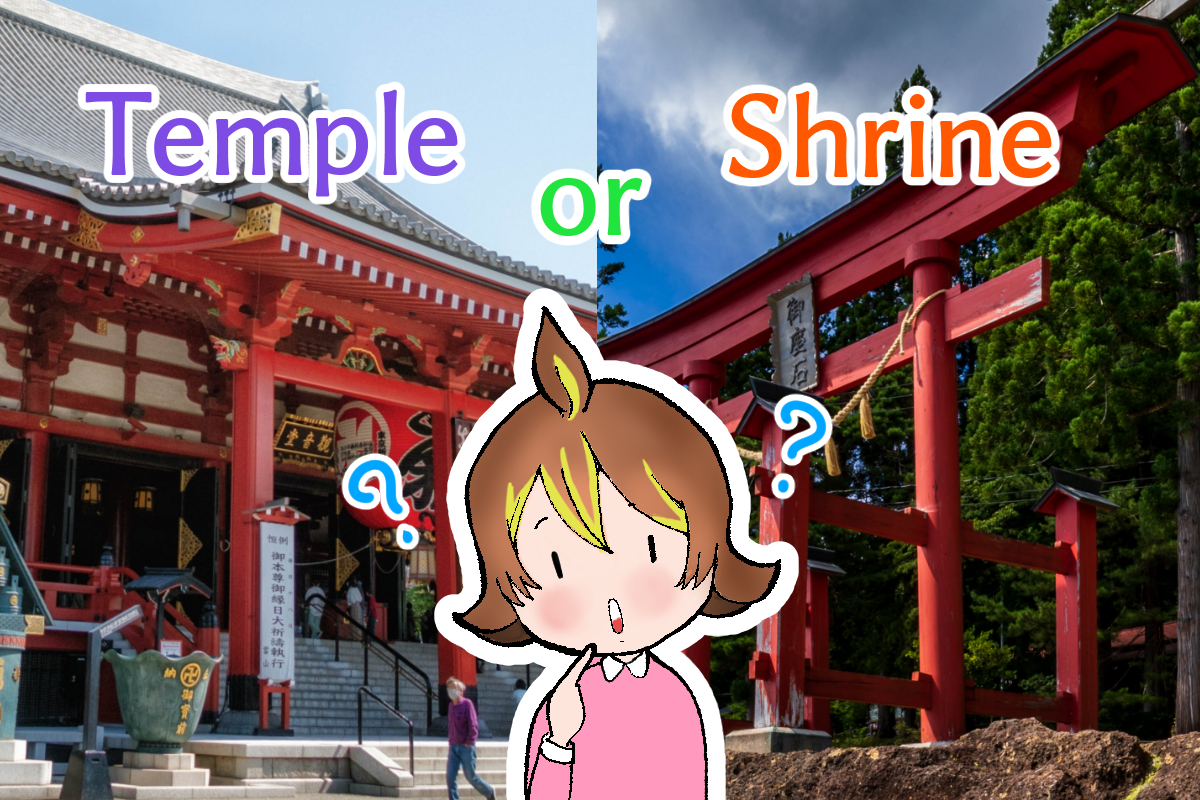

Hi, I’m Puchiko! ⛩️✨
When you travel around Japan, you’ll notice many red torii gates and magnificent temple gates.
For many overseas visitors, shrines and temples look the same—but actually, Shinto shrines and Buddhist temples are very different, each with its own role and cultural background.
In this guide, I’ll explain in a simple way:
- how to tell shrines and temples apart at a glance
- why Japan has both Shinto and Buddhism coexisting peacefully
Knowing these differences will make your Japan trip even more enjoyable! 🌸
1. Shinto and Buddhism: Why Do They Coexist?
First, let’s connect the dots between religion and place:
- Shinto (Shrine) Shinto is Japan’s indigenous belief system, rooted in respect for nature and ancestors. Mountains, rivers, trees—all of nature is considered sacred. Shinto shrines enshrine these countless deities, called yaoyorozu no kami (literally “eight million gods”).
- Buddhism (Temple) Buddhism came to Japan from India via China and Korea in the 6th century. Temples honor the Buddha and his teachings, guiding people toward peace of mind. Temples are where you’ll see statues of Buddhas and bodhisattvas.
Shinto-Buddhist Fusion
Japanese people in the past believed, “Both kami (Shinto gods) and Buddhas are here to help us.”
This idea led to Shinto-Buddhist syncretism (shinbutsu-shūgō), where shrines and temples often stood side by side—or even within the same grounds. That’s why sometimes you’ll see a torii gate at a temple!
2. When Do People Visit Shrines and Temples?
Even today, Japanese people naturally “divide roles” between shrines and temples.
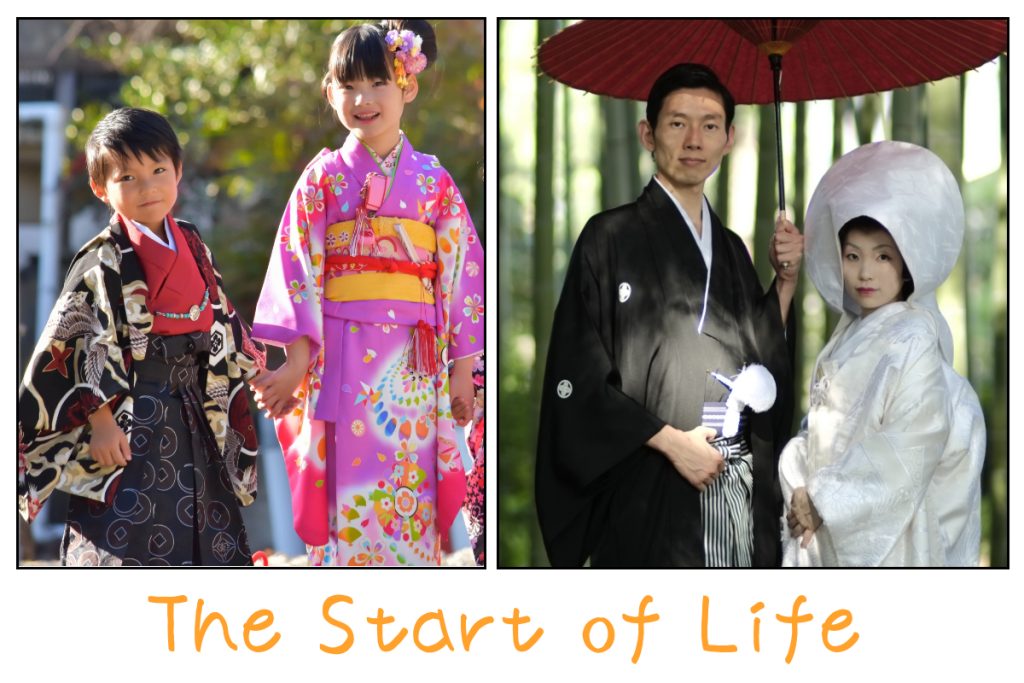
Shrines (Shinto) ✨
- New Year’s Visit (Hatsumode): praying for health and safety
- Baby Blessings & Shichi-Go-San: celebrating children’s growth
- Weddings: traditional Shinto-style ceremonies
- Good luck prayers: exams, love, business success
👉 Shrines are mainly for celebrations, new beginnings, and good fortune.
Temples (Buddhism) 🙏
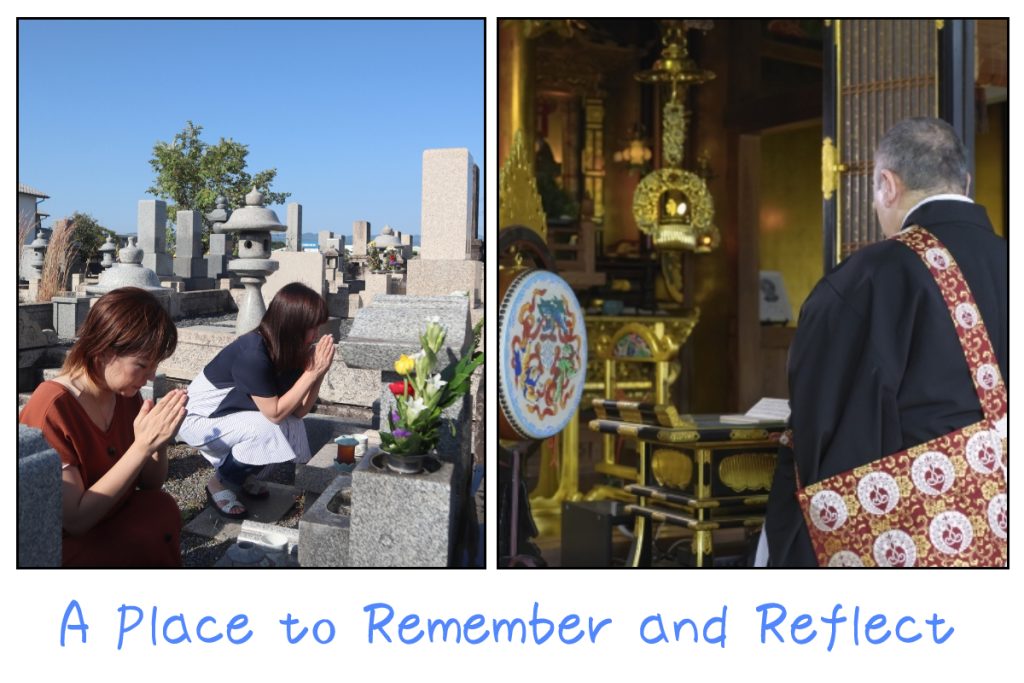
- Funerals
- Memorial services & Obon: honoring ancestors
- Visiting family graves
- Meditation, Zen, or sutra copying
👉 Temples are mainly for funerals, memorials, and spiritual reflection.
So, simply put:
Shrines = life’s beginnings and celebrations / Temples = life’s endings and remembrance.
3. How to Tell a Shrine and Temple Apart: 5 Visual Tips
Here’s how to quickly spot the difference between a Shinto shrine and a Buddhist temple 👀
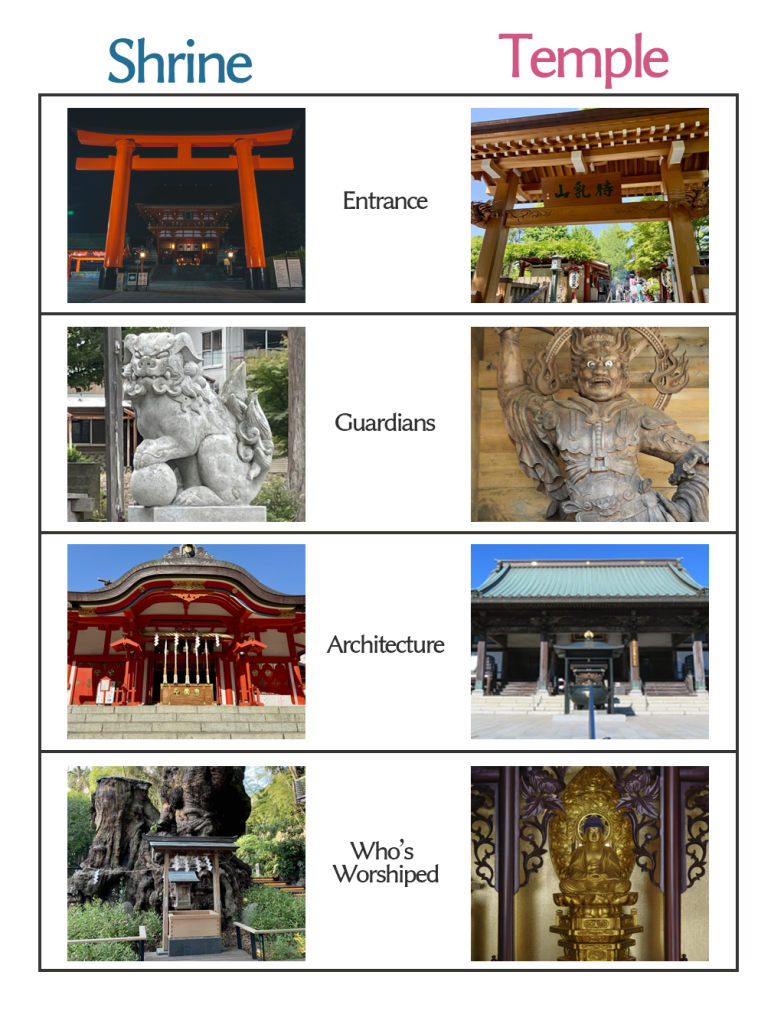
① Entrance
- Shrine → Torii gate (simple wooden or red gate)
- Temple → Sanmon gate (large tiled gate, often guarded by statues)
② Guardians
- Shrine → Komainu (lion-dog statues)
- Temple → Nio (muscular guardian deities, one open-mouthed, one closed)
③ Architecture
- Shrine → Red and white colors, natural and simple style
- Temple → Larger, often decorated with black or gold, with pagodas and bell towers
④ Who’s Worshiped
- Shrine → Kami (invisible deities), represented by sacred objects like mirrors or jewels
- Temple → Buddhas and bodhisattvas, in visible statue form
⑤ Words Used
- Shrine → Visiting is called sanpai (参拝)
- Temple → Visiting is called o-mairi (お参り)
4. Conclusion: Knowing the Difference Makes Travel More Fun
Shrines = sacred places for nature gods and life’s celebrations.
Temples = sacred places for Buddhas and ancestor remembrance.
By knowing these differences, you’ll enjoy Japanese culture on a much deeper level.
Next time you walk through Japan, you’ll be able to say, “Ah, this is a shrine!” or “This must be a temple!”
👉 Want to learn how to pray properly? Check these next:
- Japanese Shrine Etiquette: How to Pray at a Shinto Shrine for First-Time Visitors
- How to Visit a Buddhist Temple in Japan: First-Time Guide to Etiquette
Enjoy exploring Japan’s shrines and temples, and discover the unique harmony of Shinto and Buddhism 🌸