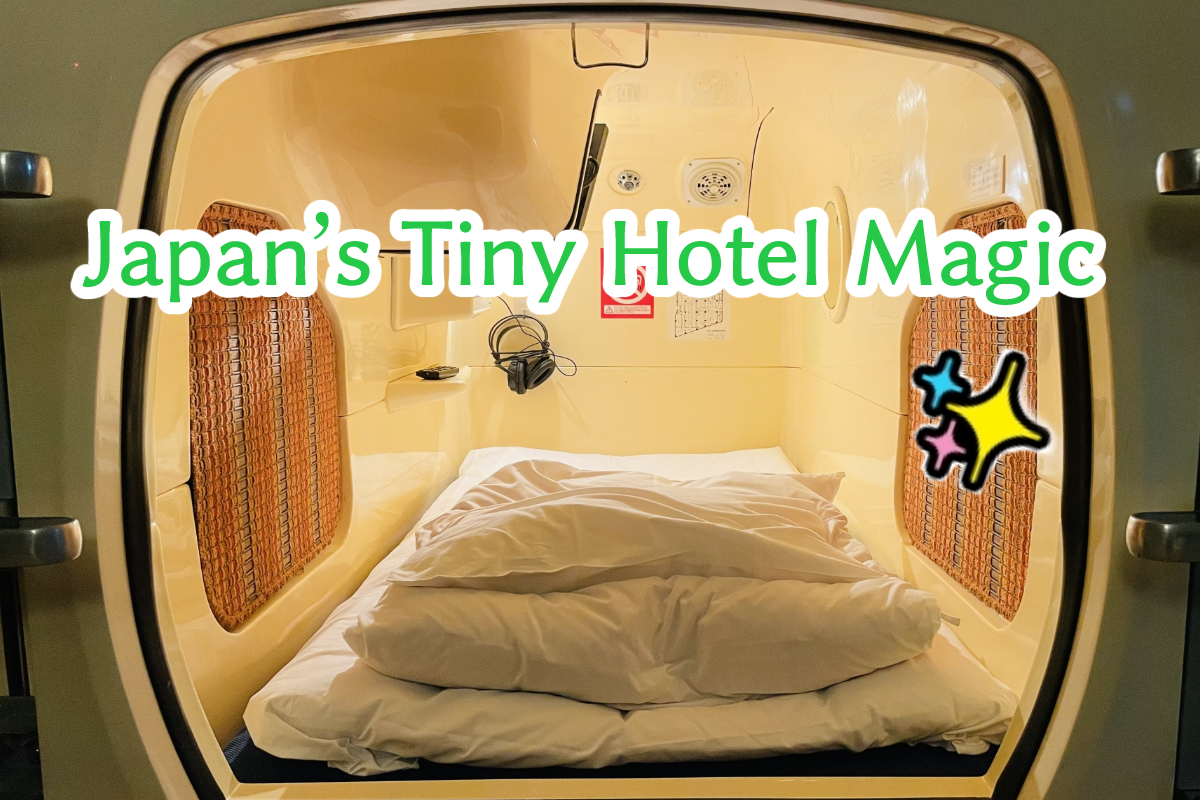

When you think about unique places to stay in Japan, capsule hotels are probably one of the first that come to mind.
Born in Osaka in 1979, capsule hotels are a Japanese invention that combines affordability, privacy, and minimalist design. They’re much more than “cheap, tiny rooms”—they reflect Japanese culture through functionality, cleanliness, and hospitality.
In this guide, I’ll explain what makes Japanese capsule hotels so special, how they compare to hostels, and why you should try one on your next trip.
1. What Is It Like to Stay in a Capsule Hotel? 🚀
The first time you enter, you might think: “Is this a spaceship? Or a secret base?”
- Compact but Comfortable Each capsule includes a light, power outlet, ventilation, and sometimes even a TV. It’s a showcase of Japanese minimalism and functional beauty. You’ll notice how every detail is perfectly placed—a small shelf by your pillow, light switches and outlets within arm’s reach, everything designed for maximum comfort in a tiny space.
- Private Space Unlike bunk beds in hostels, capsules are enclosed with walls and a curtain or door. The price is similar to a hostel, but you get much more privacy and peace—like a tiny personal room where you can unwind.
- Clean and Safe True to Japanese standards, the capsules and shared facilities are spotless. Many places have women-only floors and secure lockers for peace of mind.
- Public Baths and Saunas Many capsule hotels include large communal baths or saunas. At the end of the day, you can stretch out in a spacious bath and let the fatigue of travel melt away ♨️.
2. Capsule Hotel vs Hostel 🤔
Many travelers wonder: “Isn’t it just like a hostel with bunk beds?”
Not quite! Here’s the comparison:
| Feature | Capsule Hotel (Japan) | Hostel (Bunk Bed) |
|---|---|---|
| Privacy | Enclosed capsule with walls/door. | Open bunk bed, often just a curtain. |
| Facilities | Light, power, ventilation, sometimes TV. | Bed + small light, shared outlets. |
| Atmosphere | Quiet, restful, focused on sleep. | Social, often noisy, designed for interaction. |
| Cleanliness | Strict Japanese cleaning standards. | Varies greatly by hostel. |
| Extra Experience | Public baths, saunas, lounges. | Shared kitchens, living areas. |
👉 In short, a capsule hotel is like the best of both worlds: hostel-level price 💸, but hotel-like privacy and Japanese-style hospitality 🇯🇵.
3. Why Capsule Hotels Fit Japanese Lifestyle
Capsule hotels aren’t just for tourists—they grew naturally from Japanese daily life.
- Missed the last train? Office workers often stay in capsule hotels instead of commuting home.
- Solo traveler friendly: A private space without the cost of a full hotel room.
- Quiet and clean culture: Shared spaces are kept calm and spotless, making it easier to relax.
4. The Evolution of Capsule Hotels
Originally, capsule hotels were seen as “cheap overnight shelters” for businessmen. But today, they’ve transformed into unique travel experiences.
- Stylish designs: futuristic pods, traditional tatami-style capsules, even anime-themed stays.
- Traveler-friendly: women-only floors, English-speaking staff, international amenities.
- More than just sleep: some now include co-working spaces, libraries, or wellness-focused saunas.
Conclusion: A Capsule Hotel Is More Than a Bed 🌸
Japanese capsule hotels are:
- Compact yet surprisingly comfortable.
- Affordable but still private.
- Clean, safe, and filled with Japanese “omotenashi” hospitality.
- A chance to experience something truly unique to Japan.
So next time you visit Japan, don’t just book a regular hotel.
Try a capsule hotel—you’ll discover why it’s not just a place to sleep, but a fascinating part of Japanese culture. ✨