
Hello everyone! I’m Puchiko, born and raised in Japan.
My friends from overseas often ask me the same questions about Japanese hot springs (onsen): “Why do you have to be completely naked?” “Is it okay if I have tattoos?”
Feeling a little nervous before your first onsen experience is totally natural.
But don’t worry—there are clear reasons behind the way we bathe, and once you know the basic etiquette, anyone can enjoy it with confidence.
For Japanese people, an onsen isn’t just a simple “bath.” It’s a special place to heal your body, refresh your mind, and connect with nature.
In this article, I—Puchiko, a Japanese local—will share my personal experiences and explain everything you need to know, so your worries disappear and you can fully enjoy the magic of onsen.
So, let’s dive in together and uncover the secrets of Japan’s unique hot spring culture! ♨️✨
1. What to Know Before Entering an Onsen
So, you’re ready to jump into the onsen? …Hold on just a second!
Before your first dip, there are a few important things to know. These little tips will make your experience smooth, relaxing, and stress-free.
① What about valuables?
In the changing room, you’ll find lockers where you can store your clothes and belongings.
👉 Always put your valuables in a locker.
Many lockers are coin-operated (usually 100 yen, which you get back later), so it’s handy to carry a small coin or two.
If you’re still worried, you can ask at the front desk—some facilities will keep valuables for you.
② Don’t mix up the entrances!
Japanese onsen are separated into men’s and women’s baths.
At the entrance, you’ll usually see curtains called noren:
- Red curtain: 女 (Women)
- Blue curtain: 男 (Men)
Be sure to check the color and the sign before you go in!
(Confession: When I was a kid, I almost walked into the wrong one… it was so embarrassing, haha.)
③ Do “Kakeyu” first
Before getting into the bath, there’s an important step called kakeyu.
Use a bucket to scoop hot water and pour it over your body, starting from your feet and hands.
Why?
- To cleanse your body (it’s bad manners to jump straight into the bath)
- To let your body adjust to the temperature (sudden heat can be a shock)
The key is to start with the parts farthest from your heart, like your feet and hands.
For Japanese people, this is second nature, but it also feels a bit like a ritual to calm your mind before entering the onsen.
Now you’re fully prepared!
Time to slip into the bath and enjoy your onsen time to the fullest ♨️✨
2. How to Enjoy the Bath: A Time for Healing and Meditation
Now it’s time to finally step into the onsen.
But here’s the thing—onsen aren’t just places to “wash your body.”
For Japanese people, they’re places to rest both body and mind while feeling connected to nature.
It’s almost like meditating outdoors, surrounded by the elements. That may sound a little dramatic, but it’s honestly true.
① Enjoy the Sounds
Close your eyes and just listen.
The gentle flow of hot water, birds singing, the wind rustling through the trees…
As the everyday noise fades away, you’ll notice your mind becoming quieter too.
It feels very much like a small meditation session.
② Enjoy the Scenery
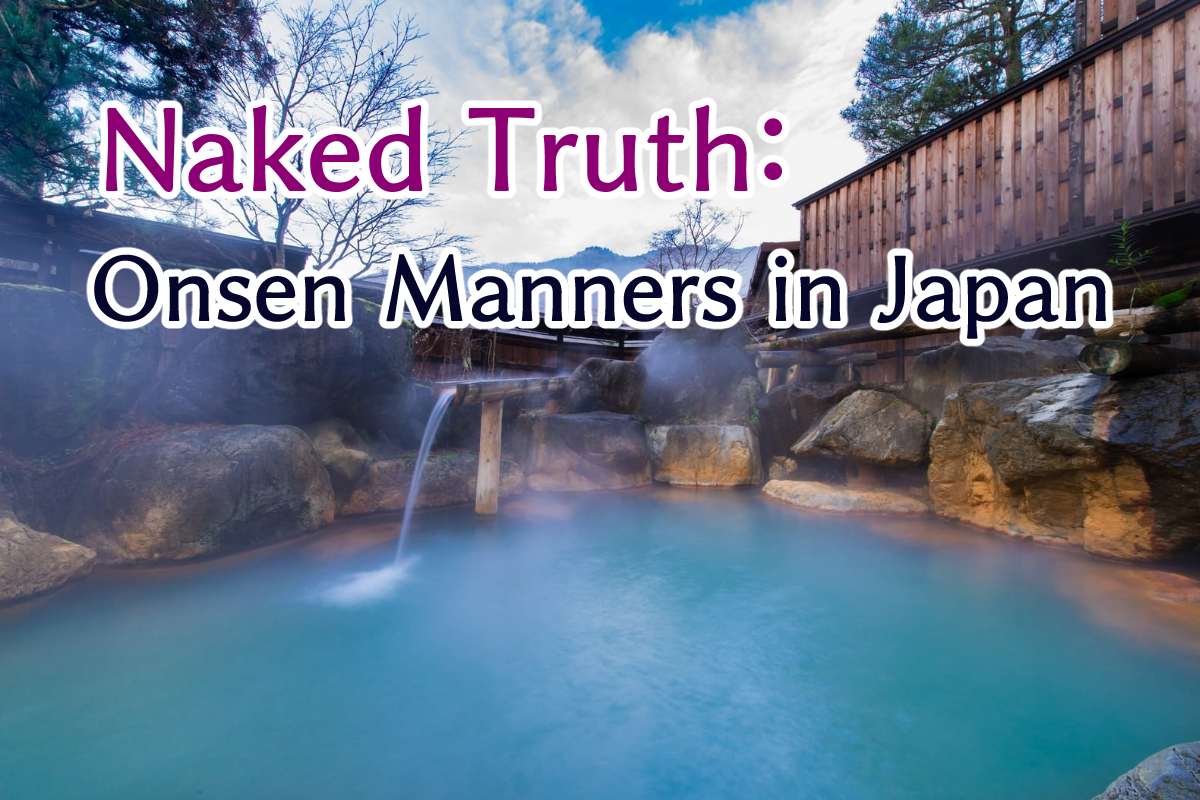
If you’re in an open-air bath (rotenburo), the view is part of the experience:
- Spring: cherry blossoms
- Summer: lush green mountains
- Autumn: colorful red leaves
- Winter: snowy landscapes
Each season brings a new kind of beauty, making it a uniquely Japanese experience.
It often feels like nature itself is giving you a warm embrace.
③ Enjoy the Quiet
Unlike a pool or water park, an onsen is a place of calm.
You won’t see people shouting, splashing, or swimming here.
👉 The rule is simple: onsen are places to rest your body and mind, so quietness is part of the etiquette.
At first, the silence might feel a little awkward, but soon you’ll realize how comforting it is.
(That said, don’t worry too much if children are a bit playful—most people expect that to some degree.)
④ Enjoy the Unique Aroma
Sometimes you’ll notice a smell like boiled eggs coming from the water.
That’s the scent of sulfur, one of the classic characteristics of Japanese onsen.
It may surprise you at first, but sulfur-rich baths are believed to improve blood circulation and even make your skin smoother.
So, instead of avoiding the smell, think of it as part of the authentic onsen experience!
Bonus: Different Types of Baths
Many onsen offer more than one type of bath, each with its own appeal:
- Rotenburo (open-air bath): connect with nature
- Medicinal baths: infused with herbs or minerals for extra warmth
- Jacuzzis: bubbling jets for a massage-like feeling
Each one is a little different, and you might find yourself wanting to try them all.
Onsen aren’t just something you “enter”—they’re something you experience with all five senses.
The sounds, the scenery, the quiet, and even the aroma all come together…
That’s the true magic of Japanese onsen. ♨️✨
3. Onsen Etiquette Q&A: Answering Common Questions
“I want to try an onsen, but… how do I do it properly?”
The most common questions I get from foreign friends are about manners and etiquette.
So here, I’ll answer some of the most frequently asked questions in a simple Q&A style.
Let’s clear your doubts and make your onsen debut stress-free! ♨️✨
Q1. I feel embarrassed about being naked. What can I do?
A: Totally understandable—it feels like a big step at first!
But don’t worry, you have options:
- Private baths (貸切風呂 / Kashikiri-buro): Many inns and hot spring facilities offer private baths you can rent by the hour. Perfect for families, couples, or friends. (Usually around ¥3,000–¥5,000 per session.)
- Rooms with private open-air baths: Some ryokan (traditional inns) have guest rooms that come with their own private onsen. It’s a luxurious way to enjoy the hot spring without worrying about others.
👉 The key point is: you don’t have to share the bath with strangers if you’re not ready.
Start with whichever style makes you most comfortable.
(But note: not every onsen has private baths, so check before booking!)
Q2. Can I enter if I have tattoos?
A: This is one of the most common concerns.
In Japan, tattoos used to be associated with crime groups, so many facilities banned them.
But things are changing—now, more places are tattoo-friendly, and some allow entry if you cover your tattoo with a special sticker or patch.
👉 Pro tip: Search for “tattoo friendly onsen” when planning.
There are websites and travel guides with updated lists of such places.
Q3. What should I do with my towel in the bath?
A: Classic onsen question!
Rule number one: Don’t put your towel in the bath.
Why? Because towels are used to wash the body, and putting them into the shared water is considered unhygienic.
Instead:
- Leave your towel outside the bath
- Or place it on top of your head (a cute little Japanese tradition!)
If you see people with towels on their heads, they’re not being silly—they’re following good manners.
Q4. Do I need to bring shampoo or soap?
A: Most onsen facilities provide shampoo, conditioner, and body soap.
But many Japanese people still bring their own favorite products.
(For example, I love using yuzu-scented body soap when I travel—it makes the experience even more refreshing 🍊).
Q5. Can small children enter the bath with their parents?
A: Yes. In many Japanese onsens, young children are allowed to bathe with a parent of the opposite gender.
The age limit varies by facility, but the general guideline is around 6–7 years old.
So, it’s not unusual to see a mother with her young son in the women’s bath, or the other way around.
This rule exists so families can enjoy the onsen experience together.
👉 That said, if this feels uncomfortable for you, the safest choice is to book a private bath or ensure children bathe with the same-gender parent.
Summary
Onsen etiquette isn’t about strict rules—it’s about making the space relaxing and enjoyable for everyone.
Once you know the basics, the nerves go away, and you’ll enjoy the experience twice as much!
4. The Magic of Rest: Don’t Skip This Part
So you’ve soaked in the hot spring and said, “Ahhh… this is heaven!”
But wait—before you jump back in, let’s talk about something many people forget: resting.
You Don’t Need to Stay in for Long
A common question is: “Do I have to stay in the bath for a long time?”
The answer is no.
In fact, soaking too long can make you feel dizzy or lightheaded. In Japanese, this is called “yu-atari” (湯あたり), which means “getting overheated from the bath.”
That’s why it’s important to take breaks—step out of the bath, let your body cool down, and then go back in later.
This “pause” is actually part of the onsen experience.
How to Enjoy Your Break
- Stay hydrated: Drink some water or tea to refresh yourself.
- Relax on tatami mats: Many facilities have rest areas with tatami (woven straw mats) where you can lie down—simple, but so relaxing.
- Try local drinks or ice cream: After a bath, Japanese people love to drink milk, soda, or enjoy an ice cream bar. It’s a small but unforgettable treat.
(For the record, I’m on Team Coffee Milk ☕🥛, though some people swear by Fruit Milk—it’s a fun little debate in Japan!)
Resting Is Part of Onsen Culture
Onsen isn’t just about soaking in hot water.
It’s a cycle: warm up → cool down → warm up again.
If you follow this rhythm, you’ll be surprised how refreshed and light your body feels afterward.
Summary
The key to enjoying onsen is going at your own pace.
Resting isn’t “wasting time”—it’s a magical part of the experience that balances your body and mind.
So don’t forget to take breaks—it might just become your favorite part of the visit.
Final Thoughts: Onsen Is About Experiencing Culture
Japanese onsen are a little different from hot springs you may know abroad.
They’re not just about warm water—they’re about connecting with nature, embracing silence, and sharing a comfortable space with others.
At first, you might think: “There’s no way I can get naked in front of strangers!”
But once you take that step, you’ll realize onsen is a place where relaxation and culture come together in a truly special way.
Onsen etiquette isn’t about strict rules. It’s really about consideration for others—an expression of Japanese hospitality (omotenashi).
Knowing just a little about this will make your worries fade, and your experience that much more enjoyable.
And the time you spend there will almost certainly make your journey in Japan more memorable and meaningful.
So take a deep breath, be brave, and—
open the door to Japan’s onsen culture!
From one Japanese local to you,
I, Puchiko, highly recommend it. ♨️✨
Check out this article too — it’ll make your hot spring time even better! ♨️😄